Vancheeyam
Kerala · April 2026

A Clean Grid, on Other People's Coal

Kerala ran a 438 MW peak-hour deficit on April 25, 2026. An autopsy of the failures, the ideology, and the fifty years of choices that made it inevitable.

Peak-hour deficit, April 25 438 MW Own generation share, FY24 18% Long-term PPAs cancelled, 2023 465 MW at ₹4.26/unit Daily cost of that cancellation ₹15–20 crore Deaths per TWh: coal vs nuclear 24.6 vs 0.03 Private IPPs supplying Tamil Nadu grid vs Kerala dozens vs ~0

I. How the System Works

An electricity system has three physical layers and one financial layer. The physical layers are generation, transmission, and distribution. Before judging anyone, a common language helps.

Generation is making the electricity. A hydro dam, a coal plant, a solar farm, a nuclear reactor. The unit of capacity is the megawatt (MW): how much power a generator can produce right now. The unit of energy — what you actually consume and pay for — is the kilowatt-hour (kWh), or for large numbers, the megawatt-hour (MWh), or "million units" (1 MU = 1,000 MWh). A 1 MW plant running for one hour produces 1 MWh.

This distinction — capacity versus energy — matters more than anything else. A state can have plenty of installed MW and still run out of power at peak hours, if its capacity is the wrong kind for its load shape.

Transmission is moving electricity at high voltage over long distances: the 220 kV, 400 kV, 765 kV highways. The central Inter-State Transmission System, operated by Power Grid Corporation, connects every state. This grid is what makes imports possible. Kerala draws power from NTPC stations a thousand kilometres away because of the ISTS.

Distribution is the last mile. The 11 kV and 415 V wires that reach your house, the meter on your wall. Distribution is where losses live — theft, billing failures, engineering inefficiency. The industry measure is AT&C losses (Aggregate Technical and Commercial). Kerala runs AT&C losses of 7.55%. The national average is in the mid-to-high teens. This part KSEB runs well.

Load shape. Demand is not constant. It peaks on summer evenings when lights and air conditioners come on together. It troughs at 4 AM. Different generators suit different parts of this curve. Coal and large hydro run cheaply around the clock. Gas turbines and batteries respond fast and expensively for the evening peak. Solar generates at noon and contributes nothing at 9 PM. Kerala's peak is 7–11 PM. Solar has gone home by then.

The financial layer: how the buying works. Generators sell to the distribution licensee — in Kerala, KSEB — through three contract types. Long-term Power Purchase Agreements (PPAs) run 15–25 years at a fixed or formula tariff. They give generators a revenue stream to finance construction, and buyers a predictable cost. They are insurance. Medium-term contracts run 1–5 years. Short-term and spot power trades on India's power exchanges — the Indian Energy Exchange and PXIL — through mechanisms like the Day-Ahead Market and Real-Time Market. Spot prices are volatile. KSEB accesses around 80 MW this way, at upwards of ₹10 per unit.

Swap deals are barter, not purchase. Kerala draws power from Madhya Pradesh in summer — when MP has surplus and Kerala's reservoirs are low — and returns it in monsoon, when Kerala's hydro overflows and MP needs top-up. No money changes hands. Efficient, when managed.

The legal framework for private entry. The Electricity Act of 2003 is the most important piece of legislation this article discusses. It delicensed power generation: any company, public or private, can build a power plant without a government licence. It mandated open access, meaning large consumers above a threshold can buy directly from generators, bypassing the state distribution company. It created India's power exchanges. Under the Act, states cannot legally block private generators from entering the generation business. What they can do is make it commercially unattractive. Kerala has been doing exactly that for two decades, as Section VI will show.

II. What Kerala Has — and What It Imports

Kerala's total installed generation capacity as of March 2024 was 6,669 MW, including its allocated share in central thermal stations across India. The in-state picture is different. KSEB owns 35 hydro stations (roughly 1,904 MW), solar at 1,314 MW, small hydro at 276 MW, and two diesel-based thermal plants at Brahmapuram and Kozhikode — sparingly used — at 537 MW combined. Hydro is the core: roughly 2,180 MW including small hydro, out of an in-state total of around 3,800 MW.

Peak demand in FY24 was 5,301 MW. By April 23, 2026, it had crossed 6,135 MW — a new record. Annual energy consumption reached 27,581 GWh in FY24, a 10.7% jump over FY23. Demand has compounded faster than supply for two decades.

This is the number that explains the crisis. Over the five years to FY23, Kerala met roughly 30% of its demand from its own generation. In FY24, that share fell to 18%, after a monsoon shortfall cut hydro output by 34%. Kerala imports 70–82% of its electricity from outside the state.

Kerala's Own Generation as Share of Total Demand
FY19–23 average
~30%
FY24
18%
Source: KSEB Annual Report FY24; CEA Resource Adequacy Plan for Kerala 2024–32; SANDRP Kerala Summer Hydro Analysis, May 2025

For comparison: Gujarat is a net exporter at roughly 71 GW of installed capacity. Tamil Nadu, Maharashtra, and Karnataka generate the bulk of their own consumption. Kerala — the wealthiest large state per capita, the most urbanised, increasingly air-conditioned — outsources its electricity to other states' coal plants.

That last phrase is not rhetorical. The power Kerala imports travels through the Inter-State Transmission System from NTPC's generating stations in Chhattisgarh, Madhya Pradesh, Telangana, and West Bengal — coal plants burning coal mined from Jharkhand and the Jharia coalfield. The carbon enters the atmosphere above Chhattisgarh. Kerala's state electricity accounts show a clean grid. Chhattisgarh's air quality monitors tell a different story: PM2.5 annual means of 50–70 μg/m³ in the coal belt districts, three to four times the WHO safe threshold. The communities adjacent to NTPC's plants in Korba district have documented rates of respiratory disease, silicosis, and heavy-metal contamination in groundwater. None of this appears in Kerala's electricity policy documents.

The state that refuses to burn coal at home is exporting the cancer risk to someone else's backyard. This is not environmentalism. It is environmental accounting — clean books, dirty atmosphere, someone poorer bearing the difference.

Why Kerala Has So Little Generation

Three reasons, in descending order of honesty.

Kerala's mountains made it a hydro state. From the 1940s through the 1980s the state built aggressively: Pallivasal, Sabarigiri (which made Kerala power-surplus in 1966), Idukki at 780 MW, Idamalayar, Kuttiyadi, Lower Periyar, Kakkad. Then it stopped.

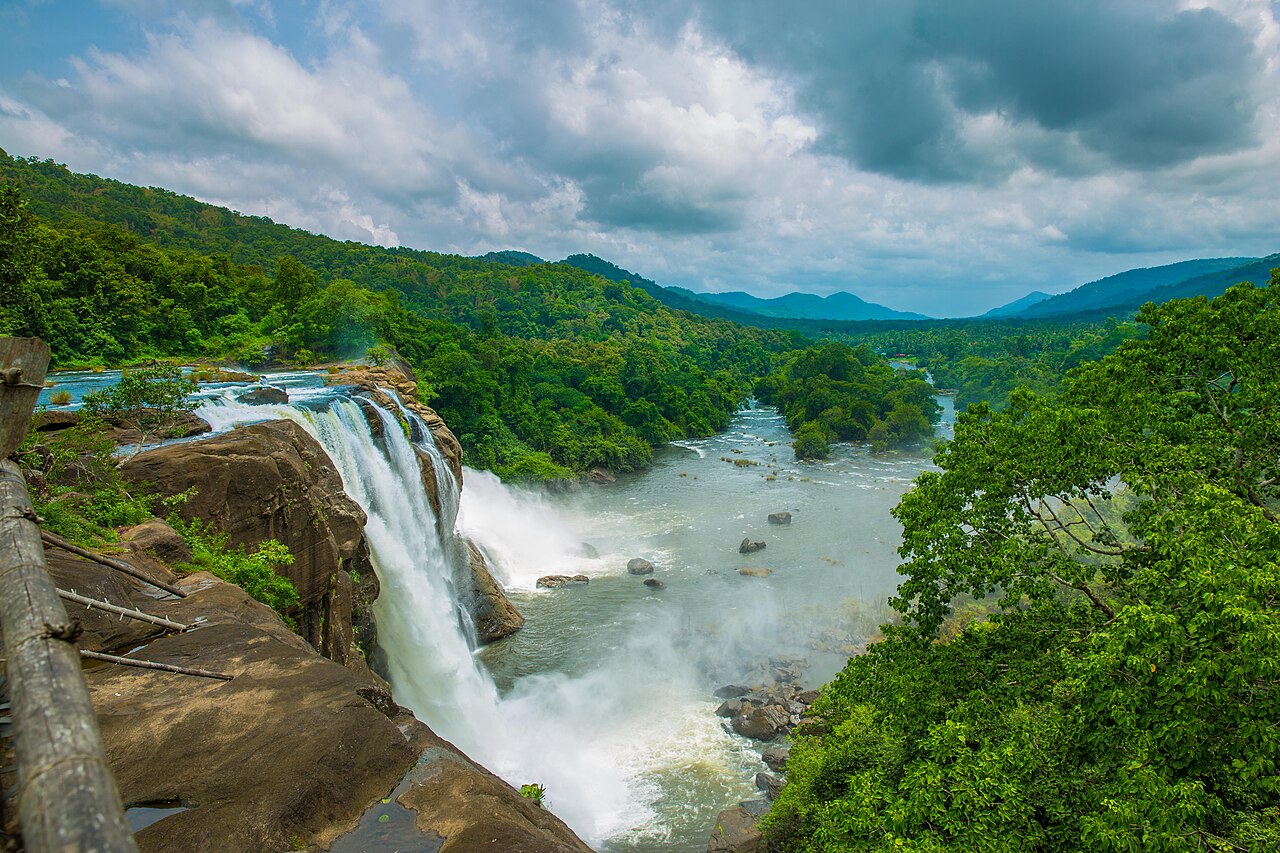
The Silent Valley movement — a twelve-year campaign from 1973 to 1985 that stopped a dam from flooding one of the last intact tropical evergreen rainforests in peninsular India — ended large new hydro. The conservationists were right about Silent Valley. The political template spread to every subsequent proposal, regardless of ecological merit. The 163 MW Athirappilly project on the Chalakudy river, first proposed in 1979, was finally abandoned in 2021 after four decades of attempts. KSEB's own website acknowledges it: proposals for major hydel projects like Silent Valley and Pooyamkutty did not materialise due to environmental clearance issues.

Kerala has no thermal coal, no significant gas, and has consistently declined nuclear. The state has chosen, by default and deliberation, not to build thermal. That is defensible on environmental grounds. It is defensible only if, in exchange, you lock in long-term import contracts at fixed prices, build pumped-storage hydro, push solar at scale, and manage your swap agreements with care. Kerala has done none of these adequately.

KSEB: The Good and the Bad

On distribution, KSEB is one of the few state utilities in India you would not be embarrassed to defend. AT&C losses at 7.55% in FY24. Outage frequency and duration among the best of any large state utility. The financial position recovered: a net profit of ₹212 crore in FY24 against a net loss of ₹991 crore in FY23, after a December 2024 tariff hike and operational improvements. Total income reached approximately ₹21,800 crore.

On procurement — on managing the 70–82% of supply that comes from outside Kerala — the record of the last three years is poor. The 2026 crisis is the operational expression of that failure. What it obscures, and what this article will try to name, is the structural ideology that made the failure almost inevitable.

III. What Happened

April 14, 2026. Total daily consumption: 112.52 MU. Peak demand: 6,012 MW. Both records at the time.

April 18. Consumption reaches 117.16 MU. New record.

April 21. The 200 MW summer swap deal with Madhya Pradesh expires. The 200 MW summer swap deal with Punjab expires. Same day. Net: 400 MW gone from Kerala's supply. KSEB has signed no replacement agreements.

April 22. First peak-hour shortage: 65 MW.

April 23. Peak demand reaches 6,135 MW at 10:30 PM. New all-time record. Shortage: 292 MW.

April 24. Shortage: 101 MW. KSERC orders KSEB to procure 250 MW of emergency power. The Commission's written order formally flags KSEB's failure to secure replacement swap deals.

April 25. Peak demand: 5,795 MW. Shortage: 438 MW. The largest peak-hour deficit in three years.

April 27–28. KSEB announces formal load-shedding of up to 30 minutes between 6 PM and midnight.

The Proximate Cause: The Swap Deals

The swap agreements with Madhya Pradesh and Punjab expired on April 21. Under these arrangements, Kerala drew summer power from states with surplus and returned it in monsoon, when Kerala's hydro is full. KSEB knew the expiry dates. The replacement work was not done. The KSERC noted this in writing. There is no technical explanation for missing a deadline you have carried on a calendar for years.

The Deeper Cause: The 2023 PPA Cancellation

In December 2014, KSEB entered long-term PPAs for 865 MW through competitive bidding — power at ₹4.26 per unit, locked in for 25 years. Three companies supplied 465 MW of that total: Jhabua Power, Jindal Power, and Jindal Thermal Power. For seven years the power flowed at ₹4.26 per unit. In 2023, KSERC cancelled those 465 MW of contracts, citing technical problems in the agreements.

The immediate arithmetic: power that cost ₹4.26 per unit now costs ₹6.50 to ₹8.00 on the short-term market, plus compensation payable to the cancelled companies. KSEB has since failed twice to replace the 465 MW. A December 2024 tender for 500 MW at 15-year fixed rates attracted only two bidders, at prices assessed higher than prevailing market rates. A June 2025 tender for the same 500 MW attracted four bidders; the lowest, Jindal Power, bid ₹5.80 per unit. Both tenders were scrapped as too expensive. Meanwhile, the daily premium KSEB pays for power it could have had at ₹4.26 runs at ₹15–20 crore. Every day.

Cost of Power: What Kerala Pays vs What It Could Have Paid
Spot / exchange market
₹6–10+/unit
Best available new PPA (2025)
₹5.80/unit
2014 PPAs (cancelled 2023)
₹4.26/unit
Source: KSERC orders; Onmanorama, April 25–28, 2026; Kerala Kaumudi, April 27, 2026

The opposition's framing — that the 2023 cancellation was incompetence or corruption — is hard to dismiss on the substance. Whether or not anyone profited personally, the regulatory action moved Kerala from a fixed ₹4.26 long-term hedge into the volatile spot market. The cost is compounding in public.

The Exogenous Factors

These are real, and they matter, but they are not the cause. They are the background against which the failures became visible.

April 2026 has been brutal across India. Kerala ran 3–4°C above seasonal norms. The feels-like temperature on the coast crossed 50°C with humidity. AC penetration in Kerala is among the fastest-growing in India. Demand jumped roughly 11% year-on-year, far above the long-run trend of 3%.

The West Asia conflict has tightened LPG supply, pushing more cooking energy onto electricity. A third consecutive below-average monsoon has drawn down hydro reservoir levels. When the whole country is hot, power exchange prices spike and surplus dries up. This is exactly the condition that long-term PPAs are designed to insulate you from.

Heat, war, and a weak monsoon raised the gun. KSEB pulled the trigger.

The KSERC Verdict

The Kerala State Electricity Regulatory Commission, in its April 24 written order, found that KSEB had failed to assess rising consumption trends; had not implemented demand-side awareness measures; had failed to secure replacement swap agreements despite a 2024 summer crisis that should have served as warning; and had not built any monitoring system for the LPG displacement effect visible from early March. The Commission noted failures in KSEB's dedicated Core and Operations Committees for power procurement.

A regulator calling its own utility incompetent, in writing, is a specific kind of document. The government owns the utility.

IV. What Was Preventable

Almost all of it.

If the 2014 PPAs had not been cancelled in 2023. Kerala would be drawing 465 MW at ₹4.26 per unit, locked to 2040. The April 25 deficit of 438 MW would essentially not exist. KSEB would not be paying the daily ₹15–20 crore premium. Whether the cancellation was technically defensible is a legal question. Whether it was strategically defensible is not close.

If the swap deals had been renewed on time. Even with the PPAs gone, the two 200 MW summer swap deals were covering the gap. Renewing or replacing them was an administrative task with months of lead time. The April 25 deficit of 438 MW is roughly the combined size of the two expired swap volumes. There is no technical explanation for missing the deadline.

If Kerala had built pumped-storage hydro. Kerala has the topography. Pumped storage takes cheap surplus solar at noon and delivers it back at the 10 PM peak — precisely the technology its load shape requires. Existing reservoirs and elevation differences across the Western Ghats make this more viable here than in most Indian states. The Draft Kerala Power Policy 2025 recognises this. Almost nothing has been built.

If Kerala had not declined nuclear allocation. India's nuclear generation feeds into the regional grid. Kerala receives some Kudankulam output through the southern grid but has consistently minimised nuclear in its procurement mix on political grounds. A state willing to contract for 1,000 MW of firm, weather-independent nuclear baseload at ₹3–4 per unit would have been materially less exposed to the April 2026 scenario. The nuclear question is examined in Section V.

If Kerala had a functioning private generation ecosystem. The Electricity Act 2003 permits independent power producers to sell directly to large industrial consumers above a threshold. In Gujarat, Maharashtra, and Tamil Nadu, this is a live market. IPPs competing for industrial customers have built thermal, wind, and solar capacity without state utility involvement. Kerala has blocked this market from functioning effectively, as Section VI will show. A grid with multiple competing generators is harder to strand than one where every kilowatt flows through a single utility's procurement desk.

If KSEB had run demand-response at scale. The 7–11 PM peak is dominated by AC and water-heating. Time-of-use tariffs, smart meters with peak-shifting incentives, direct load control of municipal water heating — these tools exist and are deployed in other grids. Kerala has discussed them for a decade without deploying them.

What was genuinely not preventable: a deeper-than-expected heatwave, a war in West Asia, a third consecutive below-average monsoon.

But those are exactly the events a robust system is built to absorb. Kerala's system was not robust, and that is not an act of God.

V. The Nuclear Question

Kerala has declined nuclear for four decades. The refusal is presented as environmentalism. It is not. It is a political choice dressed in scientific language, applied with no cost-benefit analysis, at a cost that the 2026 crisis has made visible.

France generates approximately 70% of its electricity from nuclear reactors. It has the lowest carbon intensity of any large European grid. It has, historically, had among the lowest retail electricity prices in Europe — roughly half Germany's — while Germany spent two decades and over €200 billion on its clean energy transition. France's nuclear safety record is good. The death toll per TWh from nuclear power, across the entire history of the technology including Chernobyl, is approximately 0.03 per TWh generated. Coal kills 24.6 people per TWh. Natural gas kills 2.8. Wind kills 0.04. Solar kills 0.02. On a per-unit-of-energy basis, nuclear is safer than solar. This is not a disputed number. It is published by Our World in Data, derived from peer-reviewed mortality research, and available to every policymaker in Kerala's government.

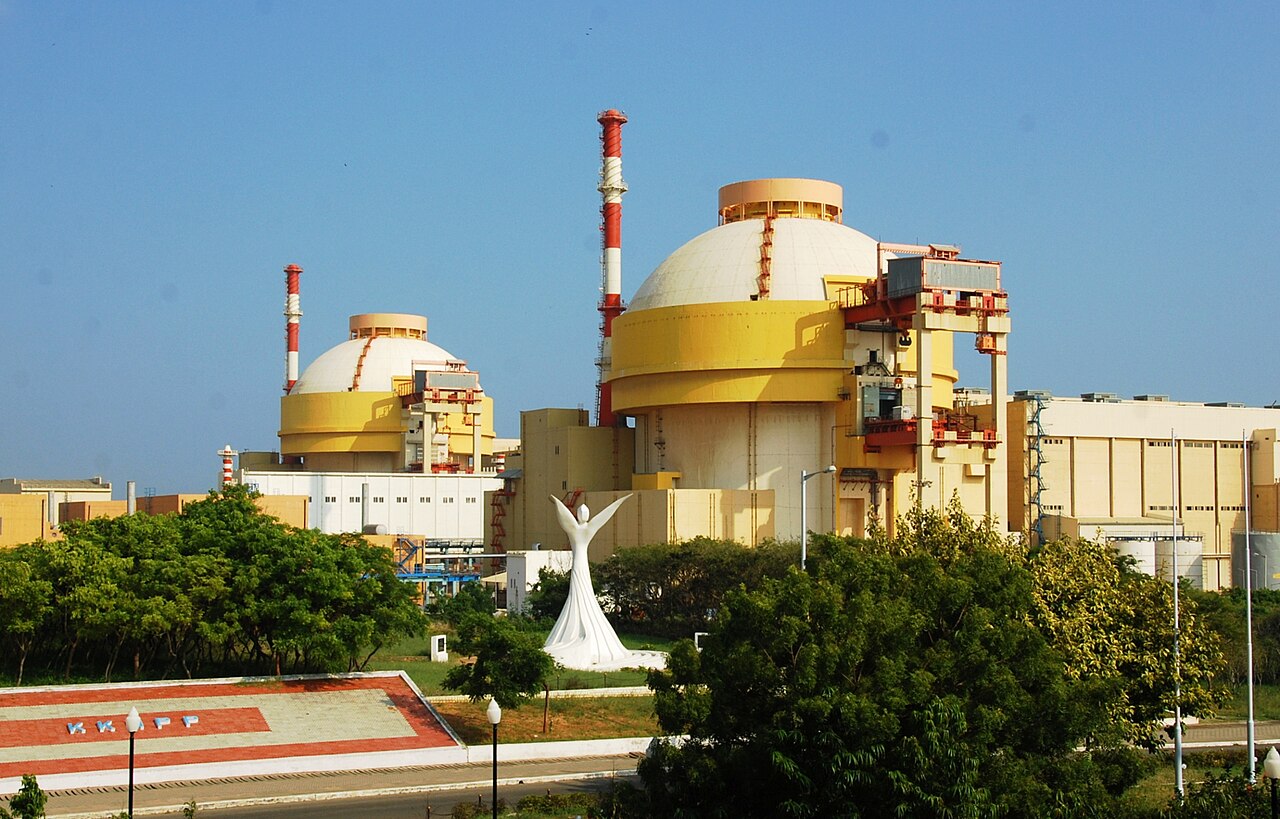
India's own nuclear programme is not abstract. The Kudankulam Nuclear Power Plant in Tirunelveli, Tamil Nadu — two units at 1,000 MW each, with four more under construction — sits approximately 300 km from Thiruvananthapuram. It has operated without incident since 2013. The Kaiga Generating Station in Karnataka has four units running continuously since 1999, with Unit 1 setting a world record for continuous operation — 962 days without shutdown — in 2018. Kakrapar in Gujarat, Rajasthan Atomic Power Station, Tarapur — all operational, all feeding the grid, without the calamities that anti-nuclear campaigners in Kerala have been predicting for fifty years.

Kerala imports power from Kudankulam through the southern regional grid. The state benefits from nuclear generation it will not host. This is the cleanest possible statement of the contradiction: Kerala accepts the electricity that nuclear produces but refuses the responsibility of producing it. The coal burns somewhere else; so does the uranium.

The standard objection is seismic risk. Kerala's western coast is not seismically inert, but it is not Japan's Pacific Ring of Fire. The relevant comparison is Kudankulam, Kaiga, and the Gujarat coast — all operating sites in comparable or higher seismic zones, all without incident. The Fukushima argument is the most commonly cited. Fukushima Daiichi melted down in March 2011 following a 9.0 magnitude earthquake and a 13-metre tsunami — one of the largest natural disasters in modern Japanese history. The direct radiation deaths from Fukushima as of 2026: zero. The evacuation of 154,000 people caused 573 documented deaths from physical stress, medical disruption, and suicide. The tsunami itself killed nearly 20,000 people. The nuclear plant did not. The comparison Kerala should make is not Fukushima-worst-case versus zero risk. It is Fukushima — an unprecedented natural catastrophe, zero direct radiation deaths — versus the documented annual mortality of coal-fired electricity that Kerala is importing.

Small Modular Reactors change the calculus further. NPCIL is developing compact domestic reactor designs based on its proven pressurised heavy water reactor technology. The 220 MW and 700 MW PHWR variants are already operational at Kakrapar and Rajasthan. A reactor in this size class does not require a large coastal site with a major water body. It does not require the land footprint or evacuation planning of a conventional 1,000 MW station. The footprint objection is becoming weaker every decade. The safety record objection was never strong.

The anti-nuclear position in Kerala is rooted in the same emotional template as Silent Valley — the precautionary principle applied to an unfamiliar technology, without examining what the status quo is actually costing. Silent Valley was an excellent application of that principle. A virgin tropical rainforest for 30 MW of hydro is not a reasonable trade. Nuclear power for a population of 36 million running load-shedding in a heat wave is a different calculation entirely. Kerala has never made that calculation. It has simply said no — and pointed at the coal plant in Chhattisgarh to fill the gap.

VI. The Monopoly That Cannot Fail

In Tamil Nadu, the private generation ecosystem is large and functioning. Adani Green, ReNew Power, O2 Power, and dozens of smaller IPPs sell into the TANGEDCO grid under long-term PPAs. Wind capacity along the Tamil Nadu coast exceeds 10 GW, almost entirely privately built and privately operated. Large industrial consumers in the auto manufacturing corridor buy directly from IPPs under open access. Tamil Nadu's grid is not managed better than Kerala's in every dimension. But it is diversified. No single procurement failure at TANGEDCO can produce a 438 MW deficit, because there are other generators under contract to supply when the utility's arrangements fail.

In Gujarat, private generation is the norm. Adani Power, Torrent Power, CESC Gujarat — private companies with their own generation assets compete for industrial and commercial consumers. Torrent Power runs an integrated generation-distribution company in Ahmedabad and Surat, posting among the lowest AT&C losses in India. Gujarat's per-unit cost of power to industry is consistently lower than Kerala's, despite Gujarat having no natural hydro advantage.

In Kerala, no private company has built a significant thermal or large hydro generation asset. Solar IPPs exist — the Kasaragod solar park, the AGEL projects — but they feed into KSEB's grid at KSEB's terms. Open access for industrial consumers barely functions. KSEB's additional surcharges on open access transactions — cross-subsidy surcharge, additional surcharge, wheeling charges — make the arithmetic unattractive for most large consumers. The regulator has trimmed these over time. The market has still not developed.

The explanation has a name: the Centre of Indian Trade Unions.

CITU — the trade union wing of CPI(M), Kerala's governing party since 2016 — represents a large share of KSEB's permanent workforce. KSEB employs approximately 28,000 people, more per unit of electricity distributed than any comparable state utility in India. Private generation threatens two things simultaneously: it reduces KSEB's revenue if large consumers defect to open access, and it creates new generation assets that do not employ KSEB workers. Open access is not merely a commercial threat to the utility. It is a structural threat to the union. Every kilowatt generated by a private IPP under a direct PPA with an industrial consumer is a kilowatt that does not pass through KSEB's system and does not sustain KSEB's headcount.

The 2025 net metering controversy made this visible. KSEB proposed new rules that would have capped the export tariff for rooftop solar prosumers at ₹2–3 per unit, while the retail tariff for consumption is ₹7–8+. Under those rules, a household investing ₹3–4 lakh in rooftop solar would have received a fraction of the economic return that made the investment viable. Consumer groups and solar companies protested; the final rules were somewhat better. But the logic behind the original proposal was clear: KSEB's financial model depends on every unit of consumption flowing through KSEB's meter at KSEB's tariff. Distributed private generation that allows consumers to produce their own peak-hour power threatens that model. The unit lost to prosumer solar is a unit KSEB does not bill and does not count toward its revenue base.

A utility that blocks its customers from generating their own power, while failing to generate enough power itself, is not a natural monopoly performing a public service. It is a protected institution maintaining its position at the consumer's expense. The 2026 crisis is what that looks like at scale: 438 MW of deficit, load-shedding orders, and emergency spot purchases at ₹10 per unit, in a state that banned the private generation that could have filled the gap.

The accountability gap is the final and most important point. The 2023 PPA cancellation cost Kerala ₹15–20 crore per day and produced a public crisis in April 2026. No one has been prosecuted. No one has resigned. The KSERC issued a written order. The government noted the order. KSEB's management is the same management. This is what happens when there is only one generator, only one distributor, and only one government: failure has no market consequences and limited political consequences, because there is no alternative. When Tamil Nadu utilities have procurement crises, industrial consumers buy from IPPs. When Gujarat utilities overprice, competitors take the customer. In Kerala, there is nowhere else to go.

VII. The Environmental Illusion

Germany's Energiewende — the energy transition — is the most expensive experiment in clean electricity in history. Since 2000, Germany invested over €200 billion in renewable energy subsidies and grid infrastructure under the Erneuerbare-Energien-Gesetz framework. The result, as of 2026, is a grid in which wind and solar contribute roughly 55–60% of annual generation, coal and lignite contribute around 20–25%, and natural gas contributes most of the rest. Germany shut down its last nuclear plant in April 2023, under a policy initiated by Angela Merkel after Fukushima. On cold, windless nights — which Germany has many of — the grid runs on lignite. On those nights, Germany imports electricity from Poland's coal-heavy grid and Czech Republic's coal and nuclear mix. The retail electricity price in Germany has been among the highest in Europe for two decades, consistently above €0.30 per kWh at retail. In France, which kept its nuclear fleet running and built no new coal, the retail price has been roughly half that. Germany's carbon emissions per unit of electricity generated are nearly five times France's.

The lesson is not that renewable energy is bad. It is that an anti-fossil, anti-nuclear posture in a grid that cannot yet be fully supplied by wind and solar has a predictable consequence: you emit the carbon you refuse to emit, somewhere else, on the nights when the wind doesn't blow. The emissions do not disappear. They relocate.

Kerala is the Energiewende at smaller scale, warmer temperatures, and lower income. The state's in-state generation is almost entirely hydro and solar — genuinely low-carbon when the hydro is running. But when the monsoon is weak, or the summer heat sends demand to 6,135 MW, the incremental power comes from the coal states. The grid does not know or care that Kerala has a green electricity policy. The electrons keeping the air conditioners running at 10 PM on April 25 are indistinguishable from the electrons that NTPC generated by burning Jharia coalfield coal in a Chhattisgarh boiler, 1,200 kilometres away.

The previous essay in this series, on Kerala's broader economic stagnation, made an observation about labour: Kerala exports its most capable people and imports its lowest-wage workers, calling the arrangement development. The power equivalent is structurally identical. Kerala refuses to generate dirty electricity in its own territory and imports dirty electricity from other states. The environmental cost is the same either way. The only difference is accounting — and geography. The pollution belongs to Chhattisgarh's air quality data, not Kerala's. The virtue belongs to Kerala's policy documents, not Chhattisgarh's.

This matters because Kerala's environmental politics are not merely a cultural preference. They have policy consequences with a direction. The refusal to consider nuclear is an environmental politics decision that produces a coal-import dependency. The refusal to allow large hydro — a policy with real ecological arguments behind it in specific cases like Silent Valley — came with no substitute plan that would have reduced coal imports by an equivalent amount. The rejection of private thermal generation is an environmental politics decision that left one utility in charge of a grid that failed on April 25.

Environmental seriousness is not measured by what you refuse to build in your own backyard. It is measured by what you are actually burning to keep the lights on. Kerala is burning coal in Chhattisgarh and calling itself clean. The accounting is flattering. The physics is not.

The global record on this is unambiguous. France chose nuclear in the 1970s and has the lowest-carbon large electricity grid in Europe, at approximately 56g CO₂ per kWh. Norway chose aggressive hydro investment and meets over 90% of its electricity needs from its own renewable sources. Both are genuinely clean. Both made choices — specific investments, specific technologies, accepted specific trade-offs. Kerala chose to stop building hydro, to reject nuclear, to block private generation, and to import from coal. That is also a set of choices, made over fifty years, by consecutive governments of both major political formations. The current crisis is the deferred interest on those choices, now due.

VIII. The Verdict

The LDF government has been in power since 2016, now in its second consecutive term under Chief Minister Pinarayi Vijayan.

What Was Done Well

Distribution operations: AT&C losses below 8%, among the best in India. SAIFI and SAIDI metrics improved and competitive with the best-run utilities in the country. Renewable expansion: 1,314 MW of solar, with 244 MW added in FY24. Tariff rationalisation: KSERC's deliberate compression of the cross-subsidy is economically correct and politically costly to defend. The financial turnaround: ₹212 crore net profit in FY24 against ₹991 crore net loss in FY23. The grid modernisation programmes — Dyuthi 1 and Dyuthi 2 — are real and quantifiable.

What Was Done Badly

The 2023 PPA cancellation is the worst single procurement decision in Kerala's recent power history. Its consequences are compounding at ₹15–20 crore per day. The campaign claim of "ten years without power cuts" — deployed repeatedly in the 2021 campaign — has been falsified by the same hand that made it. The swap deal lapse is a bureaucratic failure with no technical explanation. Pumped-storage hydro: years of policy acknowledgment, almost no construction. Demand-side programmes: no serious time-of-use rollout, no smart-meter-driven peak shifting at scale, no AC efficiency programme of consequence.

What Is Structural — and Who Benefits From It

This is where the audit becomes an indictment.

The previous essay in this series argued that every structural failure in Kerala has a political constituency that benefits from it — and named them. The same logic applies to power.

Who benefits from keeping KSEB a monopoly? CITU-affiliated workers, whose jobs, wages, and union leverage depend on KSEB's dominant position. An IPP ecosystem in Kerala would generate electricity with a fraction of the employees. Open access would route industrial demand around KSEB's billing. Net metering at market rates would let households generate their own peak-hour power. All of these are threats to KSEB's headcount and, therefore, to CITU's base. The monopoly is not maintained by accident. It is maintained by the political party that governs Kerala having a structural interest in its perpetuation.

Who benefits from the anti-nuclear position? Local activists and political entrepreneurs who have built careers and organisations on environmental opposition, for whom nuclear is the clearest possible cause — visceral, photogenic, easy to fundraise against. A nuclear plant built and operating safely in Kerala for twenty years would be evidence against every argument they have been making for fifty. Institutional interests are durable. They outlast individual governments.

Who benefits from blaming the Centre? Kerala's power shortfall is partly a function of its underallocation in central generating stations. The argument that Kerala is entitled to more NTPC capacity and is being denied it by a BJP-run Centre is not entirely false. It is, however, an argument that conveniently avoids every question about what Kerala could have built independently: private generation it blocked, nuclear it declined, hydro it abandoned, pumped storage it deferred. The Centre's allocation dispute is real. It is also useful — it provides a perpetual external explanation for a problem with extensive internal causes.

The 2026 crisis is approximately 40% policy and management failure — the PPA cancellation, the swap deal lapse, demand-side neglect, storage inaction.

Roughly 30% structural inheritance from five decades of unbuilt generation.

About 20% genuine exogenous shock: heat, war, monsoon deficit.

The remaining 10% is the slow drift of any monopoly utility under any government.

The UDF before the LDF also failed to push hydro substitutes, also avoided storage build-out, and also leaned heavily on imports. But the UDF signed the 2014 PPAs at ₹4.26 per unit. That is exactly the move a small import-dependent jurisdiction needs to make, and it is the single most consequential Kerala power decision of the last decade. The LDF allowed those PPAs to be cancelled in 2023. That decision, and its ₹15–20 crore daily cost, belongs to the current dispensation.

What Needs to Happen

Sign new long-term PPAs now. ₹5.40–5.80 per unit for 15 years is far better than ₹6–10 on the spot market. The Damodar Valley Corporation deals at approximately ₹5.40 per unit should be approved without further delay. Renew swap agreements before next summer — Madhya Pradesh, Punjab, Himachal Pradesh, and Chhattisgarh all have complementary load profiles. This is bureaucratic work. It requires a calendar and a follow-up mechanism.

Build pumped-storage hydro at minimum 1–2 GW over the next decade, using existing reservoirs where possible. It is the single highest-leverage supply-side intervention for a state with Kerala's load shape. Introduce mandatory time-of-use tariffs for HT and large commercial customers; voluntary with smart meters for domestic. Redesign rooftop solar net-metering rules to reward prosumers at market-reflective export rates rather than penalising them.

Open access must function. KSERC should reduce cross-subsidy and additional surcharges to levels that allow IPPs to compete for large industrial consumers. This will reduce KSEB's captive revenue and — over time — its permanent headcount. That reduction is not a bug. It is the efficiency dividend that market competition produces, and it belongs to electricity consumers.

Commission a formal review of Kerala's nuclear position, with a full cost-benefit analysis that includes the carbon cost of coal imports, the safety record of India's operating PHWRs, and the compact reactor options available through NPCIL's domestic programme. The review should be conducted by people who are not invested in the outcome — which means it cannot be done by the current environmental movement or the current KSEB management. It can be done by the Kerala State Planning Board if that body still has independence.

Commission a public post-mortem on the 2023 PPA cancellation. If there were corrupt motives, prosecute. If bureaucratic, document and change the process. The current silence is politically convenient and operationally dangerous.

None of this requires a change of ideology in the sense that Kerala must build a coal plant. The ideology that refuses coal on environmental grounds is internally coherent. But a coherent environmental ideology has to answer the question it generates: if not coal, then what? Kerala's ideology refuses to answer. It refuses nuclear. It refuses private thermal. It refuses market-rate prosumer solar. It refuses to build large hydro. It does not refuse to import the electricity that coal produces. That is not an ideology. It is a preference for clean hands.

Kerala has, for two summers running, treated its electricity system as a weather event. The 2026 crisis is the predictable interest payment on decades of deferred decisions and unanswered questions. Whether it is the warning shot or the actual collapse depends entirely on what happens before April 2027.

Sources

  1. Onmanorama, April 25–28, 2026 — crisis coverage and KSEB procurement timeline
  2. Kerala Kaumudi, April 27, 2026 — load-shedding announcement and KSERC order details
  3. Kerala State Electricity Regulatory Commission, written order of April 24, 2026
  4. KSEB Annual Report FY24, Kerala State Electricity Board Limited
  5. CEA Resource Adequacy Plan for Kerala 2024–32, Central Electricity Authority
  6. KPMG Kerala Energy Storage Viability Report, March 2025
  7. Draft Kerala Power Policy 2025, Government of Kerala
  8. SANDRP Kerala Summer Hydro Analysis, May 2025
  9. Down to Earth — Athirappilly project coverage, 2020–21
  10. Hannah Ritchie, "What are the safest and cleanest sources of energy?", Our World in Data, 2020
  11. International Atomic Energy Agency, Fukushima Daiichi Accident: Ten Years On (2021)
  12. NPCIL Annual Report 2024–25 — status of operating and under-construction reactors
  13. IEA, Germany 2020 Energy Policy Review — Energiewende assessment
  14. Agora Energiewende — German power sector data 2023–24
  15. CERC Open Access Regulations — cross-subsidy surcharge framework
  16. Business Standard — KSEB net metering rules controversy, September 2025
  17. Oxford Energy Forum No. 136 — electricity market design and long-term contracting
  18. Paul Joskow, California's Electricity Crisis, NBER Working Paper 8283
  19. Wikipedia, States of India by installed power capacity, March 2026
  20. CEIC India electricity database — consumption data